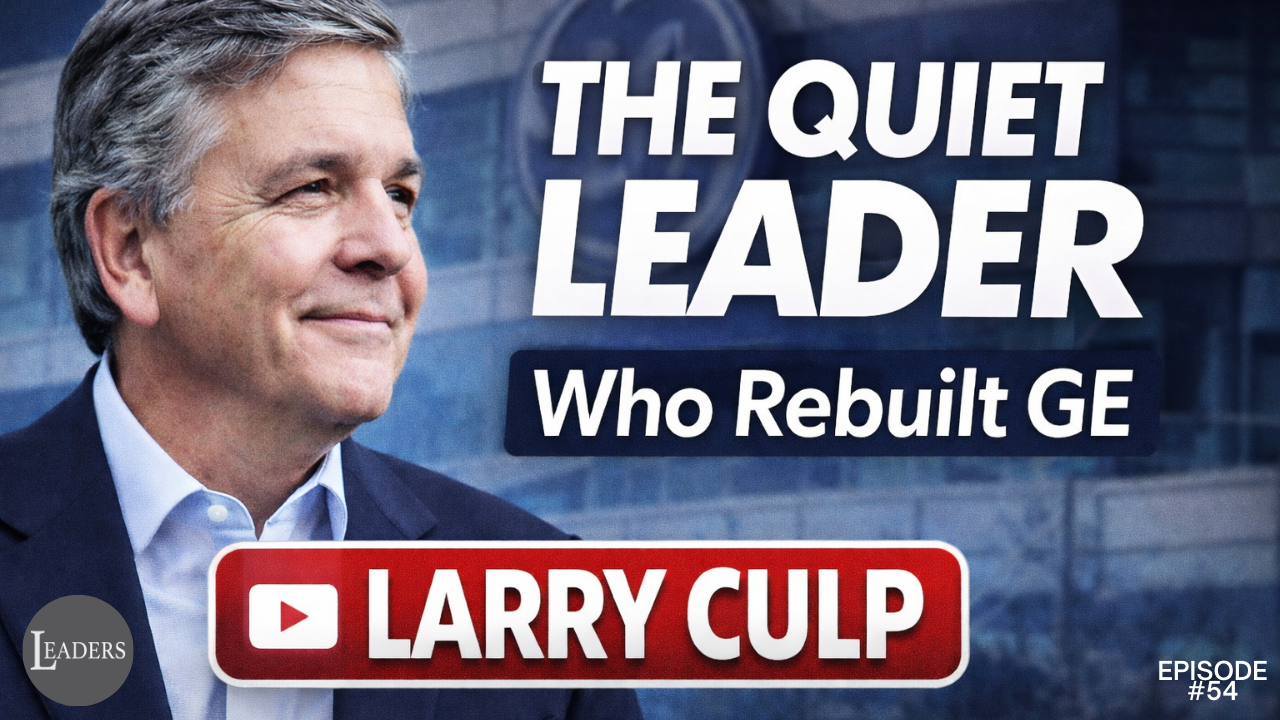
Larry Culp’s Leadership Style: How Quiet Discipline Rebuilt GE
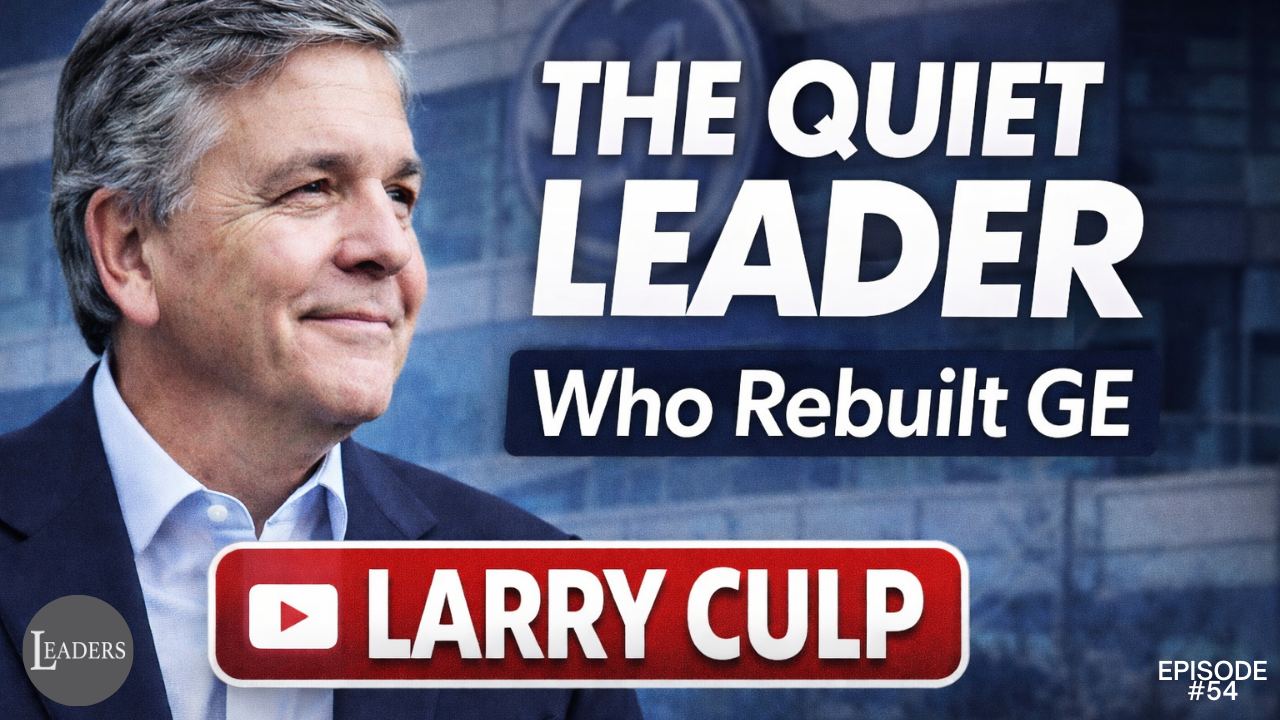
“We’re not here to manage decline. We’re here to build something better.”
That mindset helped Larry Culp take on one of the most difficult corporate turnarounds in modern history.
When he became CEO of General Electric in 2018, the company had lost more than 70% of its market value in less than two decades.
Debt was crushing.
Trust was gone.
Wall Street was impatient.
Many thought GE was unfixable.
Culp didn’t.
And he didn’t fix it with charisma, slogans, or grand speeches.
He fixed it with systems. Discipline. And an almost stubborn commitment to fundamentals.
Let’s talk about how.
He Leads with Structure, Not Spotlight
Larry Culp is not a headline chaser.
He doesn’t dominate earnings calls with flashy promises.
He doesn’t flood social media with leadership quotes.
Instead, he builds operating rhythm.
Daily reviews.
Weekly metrics.
Monthly priorities.
It sounds boring.
It’s not.
It’s powerful.
At GE, Culp reintroduced something many organizations quietly abandon over time: clear accountability.
Every leader knew:
What they owned
How performance was measured
When progress would be reviewed
No ambiguity.
No hiding.
If you lead a team, here’s the takeaway:
Write down who owns what. Review it every week. Publicly.
It’s uncomfortable.
It works.
He Believes Strategy Is a Daily Activity
Many executives treat strategy like a yearly retreat.
Culp doesn’t.
He learned early in his career that strategy only matters if it shows up in daily decisions.
At GE, he pushed leaders to answer three questions constantly:
What matters most right now?
What are we stopping?
Where are we reallocating resources?
Not next year.
Now.
I’ve seen companies drown in “strategic plans” that no one opens again.
Culp avoided that trap.
Strategy lived on whiteboards. In meetings. In performance reviews.
Actionable lesson:
If your strategy isn’t referenced weekly, it isn’t real.
He Uses Data Without Becoming Its Prisoner
Culp is deeply data-driven.
But he is not data-blind.
There’s a difference.
He expects leaders to know their numbers cold.
Margins. Cash flow. Backlog. Working capital.
No excuses.
But he also asks:
“What’s behind this?”
“What worries you?”
“What are we missing?”
He understands that dashboards don’t tell stories.
People do.
In meetings, he often presses beyond slides.
That forces honesty.
Try this in your next review:
After the presentation, ask:
“If this were your company, what would keep you up at night?”
Then listen.
He Practices “Relentless Simplification”
When Culp arrived, GE was sprawling.
Too many businesses.
Too many layers.
Too many committees.
Complexity was killing speed.
So he simplified.
He sold assets.
Exited businesses.
Flattened structures.
Clarified reporting lines.
Not all at once.
Methodically.
Relentlessly.
Over time, GE became easier to manage. Easier to understand. Easier to fix.
This is underrated leadership work.
Simplification isn’t glamorous.
But it frees talent.
Ask yourself:
What processes exist only because “we’ve always done it that way”?
Cut one this month.
He Builds Trust Through Consistency
Culp didn’t promise miracles.
He promised discipline.
Then he delivered it.
Quarter after quarter.
Same message.
Same priorities.
Same standards.
That consistency rebuilt credibility with investors, employees, and partners.
Trust doesn’t come from speeches.
It comes from predictability.
People began to believe:
“If Culp says it, it will happen.”
That’s rare.
And priceless.
If you want more influence:
Say less. Deliver more.
He Invests in Leaders, Not Just Results
One quiet part of Culp’s style is how much time he spends developing managers.
He asks probing questions.
He gives direct feedback.
He expects growth.
Poor performance isn’t ignored.
But neither is potential.
He looks for leaders who can run systems, not just chase numbers.
At GE, many executives were reshaped, not replaced.
That matters.
It creates continuity.
And loyalty.
Practical move:
Schedule quarterly “development-only” conversations with your top people.
No KPIs.
No scorecards.
Just growth.
He Treats Cash Like Oxygen
Here’s where Culp is ruthless.
Cash flow.
At GE, weak cash management had masked problems for years.
Culp made cash the center of gravity.
Every leader knew their cash targets.
Every project was evaluated through that lens.
Not revenue.
Not vanity growth.
Cash.
It changed behavior overnight.
For most organizations, this is transformative.
Try this:
Review cash impact before approving any major initiative.
You’ll be shocked how priorities shift.
He Leads Calmly in Chaos
During restructurings, asset sales, and market pressure, Culp stayed steady.
No panic.
No theatrics.
No emotional swings.
Employees noticed.
So did investors.
Calm is contagious.
So is fear.
Leaders choose which one spreads.
In crisis, Culp defaulted to facts, process, and transparency.
That created psychological safety.
People focused on solving problems instead of protecting themselves.
The Real Lesson: Systems Beat Personality
Larry Culp’s greatest insight is simple.
Leadership is not about being extraordinary.
It’s about building environments where ordinary people can perform extraordinarily.
He didn’t “save GE” with charm.
He did it with:
Clear ownership
Daily execution
Financial discipline
Talent development
Structural simplicity
It’s not sexy.
It’s repeatable.
And that’s why it works.
How You Can Apply Culp’s Style This Quarter
Here’s a practical starting point:
1. Create a Weekly Operating Review
One page.
Five metrics.
Same agenda every week.
2. Clarify Top 3 Priorities
No more than three.
Review them constantly.
3. Kill One Process
Find one meeting, report, or workflow to eliminate.
4. Elevate Cash Awareness
Make financial impact visible to your team.
5. Coach One Leader Deeply
Not casually.
Intentionally.
Do this for 90 days.
You’ll feel the difference.
So will your team.
Final Thought
Larry Culp proves something important.
You don’t need to be loud to lead.
You need to be clear.
Consistent.
And relentless about execution.
That’s the kind of leadership that lasts.

Conrad Hilton Leadership Style: 6 Lessons from the Hilton Empire