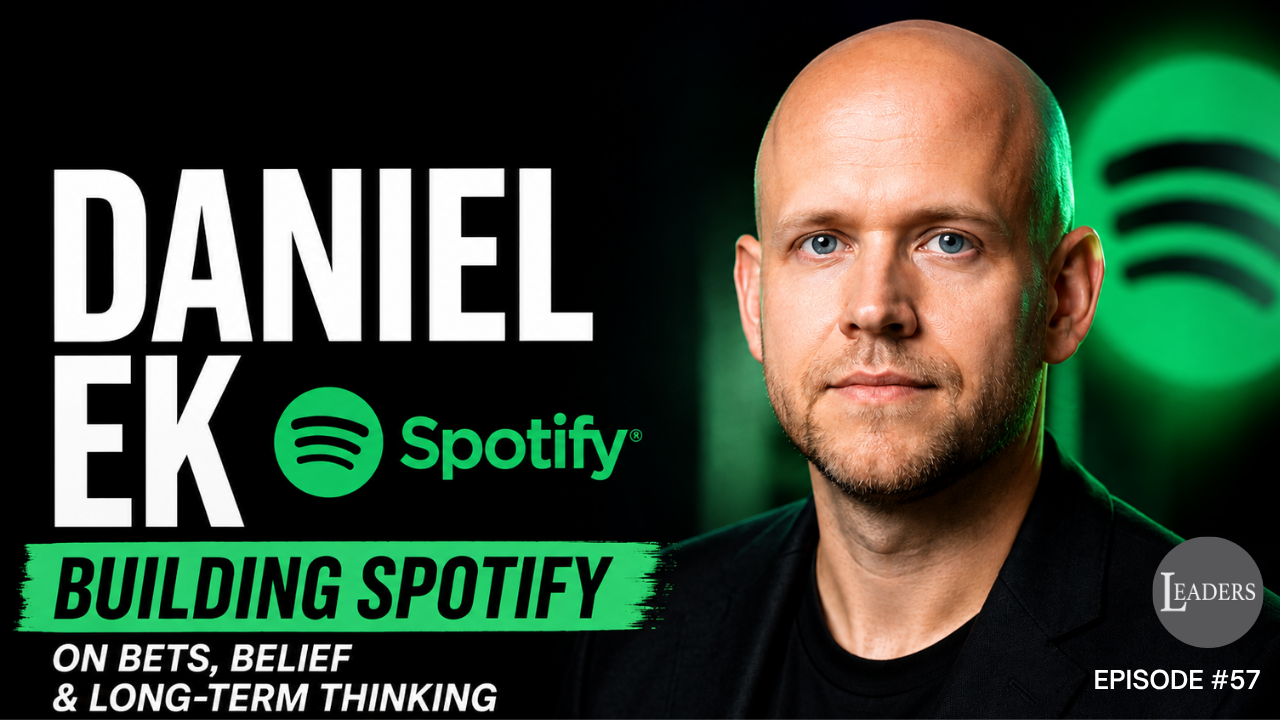
Daniel Ek's Leadership Style: 6 Lessons From Spotify's Founder on Delegation, Context, and Playing the Long Game
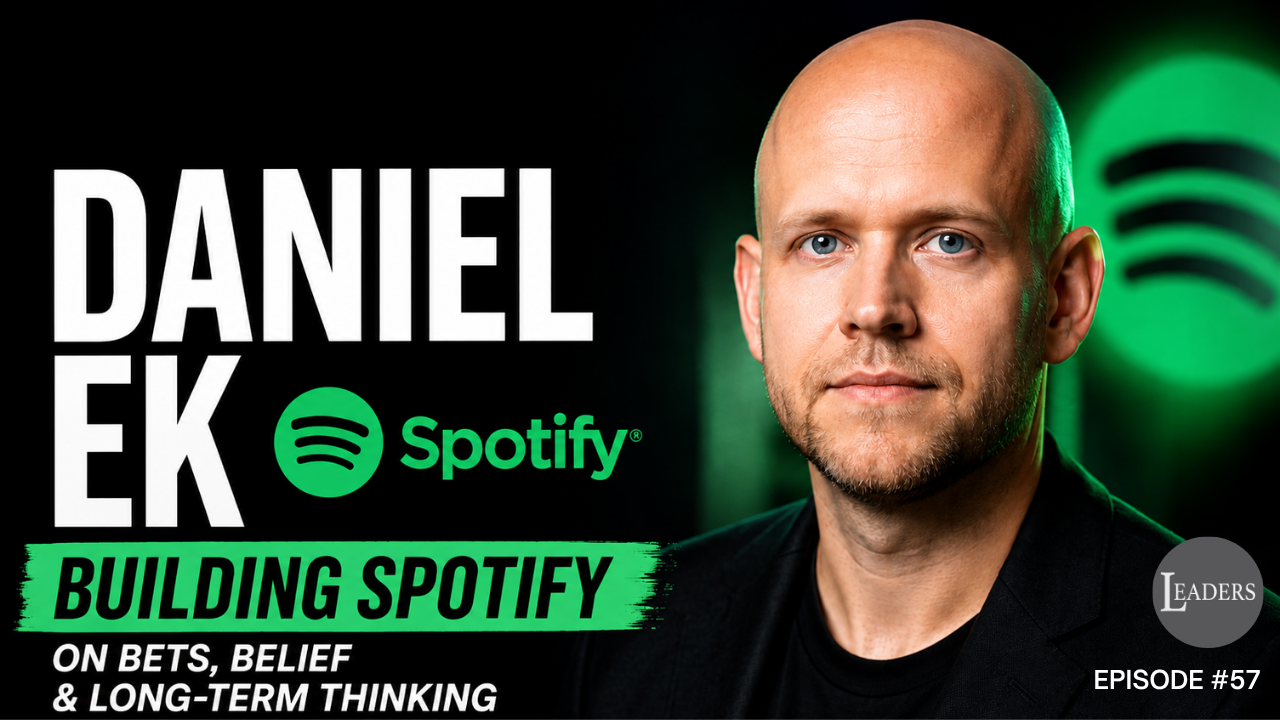
The Least Powerful Man at Spotify: What Daniel Ek's Leadership Style Actually Teaches Us
"I'm probably the least powerful person at Spotify." Say that sentence out loud. Now imagine the founder, chairman, and largest shareholder of a $150 billion company saying it about himself, in public, without a hint of false modesty. That's Daniel Ek. And it's the whole key to understanding how he built one of the most influential media companies of the century.
Most leadership advice tells you to grab more control. Ek did the opposite. He spent two decades giving it away, on purpose, and it made him more powerful, not less. If you manage people — or even just yourself — there's a real playbook buried in how he did it. Let's dig in.
The Scandinavian Model: Delegate Until It's Uncomfortable
Ek grew up in a business culture that treats consensus as a feature, not a bug. In Sweden, decisions move slower, ambiguity is normal, and nobody expects the boss to have all the answers. Ek has said American colleagues sometimes struggled with this. They'd come to him expecting a verdict, and he'd hand the decision right back to them.
That's not indecision. It's a system. Ek built Spotify so that authority sits with the person closest to the problem, not the person with the fanciest title. He calls it the Scandinavian leadership model, and it's the reason he can honestly claim to make fewer decisions than almost anyone in his own building.
Here's the actionable part: next time someone on your team asks you to make a call that isn't really yours to make, resist the urge to feel flattered. Hand it back. Ask them what they'd decide if you weren't in the room. You'll be amazed how often they already know.
Know Your Role Before You Walk Into the Room
Early on, Ek personally ran Spotify's product review meetings. He wanted to help. He wanted to steer things toward good outcomes. The meetings were, by his own account, a disaster. People dreaded them. Eventually a product leader pulled him aside and told him so, directly.
Ek's fix is simple enough to steal today. Before any meeting, be explicit about why you're there: are you deciding, being consulted, or just being kept informed? Confusing those three roles is probably the single most common way leaders accidentally suffocate their own teams. A boss who shows up "to be informed" but starts making calls anyway teaches everyone in the room to stop bringing him real problems.
Try this in your next week of meetings. Put your role in the calendar invite. It feels almost too basic to matter. It matters enormously.
Context Over Control
This is the idea Ek returns to more than any other: give people context, not commands. Spotify's famous "squad" structure — small, cross-functional teams that behave like tiny startups inside a big company — only works because of this principle. A squad doesn't get a script. It gets a mission, a set of constraints, and the freedom to figure out the rest.
Constraints matter here as much as freedom does. Ek isn't running an anything-goes free-for-all. He's drawing a fence, then trusting people completely inside it. That distinction is everything. Autonomy without context turns into chaos. Context without autonomy turns into micromanagement wearing a friendlier outfit.
The practical version for your own team: stop writing instructions. Start writing context. Instead of telling someone exactly what to build, tell them the problem you're solving, who it's for, and what "done" looks like. Then step back. Genuinely step back.
Play the Decade, Not the Quarter
Spotify lost money for years. Years! Investors grumbled, competitors circled, and plenty of executives would have panicked into short-term fixes. Ek didn't. He kept the company focused on growing a loyal, engaged user base first, betting that monetization would follow scale rather than the other way around. It did.
That patience is a leadership skill, not just a financial strategy. Short-term thinking is contagious inside organizations; one anxious quarter and suddenly everyone is optimizing for the wrong thing. Ek's discipline was refusing to let quarterly noise rewrite a decade-long thesis.
If you're building anything worth building, write down your five-year bet on one page. Then, when a bad quarter hits — and it will — reread that page before you change strategy. Most pivots born from panic aren't strategy. They're just fear with a business plan attached.
Guard Your Energy Like It's Capital
Ek has described himself as an introvert who had to consciously train himself to be visible as Spotify scaled from a scrappy startup into a global workforce. Walking the office and chatting with employees worked at 50 people. It didn't work at 5,000. He had to find new sources of energy and protect them deliberately, because low energy in the top seat doesn't stay contained — it leaks into every meeting, every decision, every relationship down the chain.
This is the part most leadership content skips. Nobody talks about energy management like it's a real operating discipline, but it is. Treat your calendar the way a fund manager treats a portfolio. Some meetings are a drain with no return. Cut them. Protect the two or three hours a day where your thinking is sharpest, and defend that time as if it were revenue — because in a real sense, it is.
Knowing When to Change Your Own Title
Here's the part of the story still unfolding as I write this: in 2026, Ek stepped back from the CEO seat entirely, moving into the role of Executive Chairman and handing day-to-day leadership to two long-tenured co-CEOs. He framed the shift as simply matching titles to how Spotify already operated, describing his career at the company as a string of different "missions" under one unchanged title.
That reframe is worth sitting with. A lot of founders treat their title as identity. Ek treats it as a job description that should update as the company's needs change. The willingness to formally hand over operational control — after building the whole culture around delegation — is the leadership style proving itself one more time, at the very top.
The Real Takeaway
None of this works as a slogan. "Empower your team" is a poster in a break room. What Ek actually did was build specific mechanisms — clear meeting roles, small autonomous squads, a long time horizon, deliberate energy management — that made empowerment structural instead of aspirational.
Pick one. Just one. Maybe it's stating your role before your next meeting. Maybe it's writing that five-year page. Start there, and see what happens when you stop being the most powerful person in the room on purpose.

Michael Dell Leadership Style: 6 Leadership Lessons Behind Dell's Billion-Dollar Success